
Group for Development
and
Autonomy of Communities
GDAC PROJECT
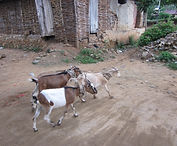
Goats
75 FAMILIES complete the “goat project”:
-
48 goat shelters - shelters protected GDAC animals during the December 2016 hurricane- our families did not lose a single goat to the storm.
-
All goats supported with medications for deworming
-
2019: 27 more goats given away this year to make our total 75 Families benefitting from a goat.
We have a farm now (2021) for our goats - with a barn and fenced in pastures so the goats don't have to be tied out. The goats have free-choice access to water. This farm is a source of revenue to help support the veterinary program and a model farm to provide education to producers.


Education:
2017/2018: GDAC regional committee provides training and support to new goat owners
2018: Two sessions of "farmer" training were offered in February - one by Equitarian Initiative and one by Dr. Brower
2018: December Alchemy and Nadege Cadet completed 12 weeks of Veterinary Agent training at Ag-Horizon.
2018: Marc Milien has been selected by the GDAC Advisory Groups to attend Ag Horizon Veterinary Field Agent School.
2019: A fourth person will attend the Ag Horizon Veterinary Field Agent school. Farmers received training prior to receiving goats
2020: GDAC welcomes our newest Ag-Horizon Graduate veterinary Field Agent, Carline Sucois! She is a welcome addition to our group of Mombin Crochu vet agents!
2025: We lost Marc Milien to a chronic illness this year. We are saddened by his loss and miss his enthusiasm for helping animals.
2026: Guerlande Décélia and Mickelange Alfrède are two young individuals selected from the community by the GDAC-HAITI organization to strengthen our veterinary medical team. They are currently undergoing veterinary agent training at the Agro-Horizon facility in the commune of Pignon, in the Northern Department.

Animal Care
2017: GDAC sponsored veterinary agents conducted 18 mobile clinics, going beyond goat care to providing care for pigs, roosters, oxen, cattle, horses, donkeys, mules, burros and rabbits. We served over 1,800 animals this year!
2018: Partnering with Equitarian Initiative (EI) and Christian Veterinary Mission (CVM), another 185 animals received care in March. GDAC vet agents continue to offer 2-3 mobile clinics per month and staff the GDAC pharmacy during Wednesday market days.
2019: GDAC, EI, CVM and Ag Horizon school partnered up again in February to deliver care to almost 400 animals!
2020: We built 10 more goat shelters for our recieving families to provide safe housing for animals overnight and in stormy weather. We continue to provide mobile clinics and our agents are now training other agents in adjacent regions.
2021: GDAC hires a full time goat herdsman to provide care for our small but growing goat herd that will be the source for goats for our goat give-away events
From 2022 to 2026 : Veterinary agents continued working alongside livestock farmers, providing mobile clinics and animal care within the community. They also organized several training sessions for a large number of farmers to share knowledge about animal health and emphasize the importance of prevention.
In total, 3,964 animals received medical care during this period.
Additionally, 897 farmers participated in the training sessions.
FOOD STORAGE
The Food Storage Program consists of storing harvested crops in safe and appropriate conditions to reduce post-harvest losses, preserve product quality, and ensure food availability throughout the year.
The project began in 2017. Farmers receive a measured amount of seed to plant and then return that amount plus an extra third more after harvest. Thus, the seed bank is self-supporting.
Benefits
• Food Security: Ensures a stable food supply beyond harvest seasons and during emergencies.
• Economic Benefits: Allows farmers to sell their products when market prices are more favorable.
• Crop Protection: Protects agricultural products from moisture, bad weather, insects, and rodents.
• Seed Preservation: Maintains the quality of seeds and tubers for future planting seasons.
The Food Storage Program is essential for improving farm profitability and strengthening food security.
2025: We provided 280 families with seed for their crops. They returned14% more seed than they received after harvest was completed.

GDAC HOUSE / SOLAR ENERGY / PHARMACY

The GDAC building will strengthen animal health, food security, and support for local farmers. With donor support, we have developed a veterinary pharmacy with safe medicine storage, solar-powered refrigeration, secure agricultural storage, and a training space. Located near the GDAC goat farm, the facility provides a shelter for hands-on instruction to help farmers protect livestock, improve production, and increase household income.
This high impact investment is urgent in under-resourced Mombin Crochu. Reliable solar power preserves medicines and vaccines, enabling mobile clinics to reach remote communities with appropriate medications. The facility will help farmers prevent disease, respond to outbreaks, protect livestock, and build more resilient farms and communities.

Training of Veterinary Agents
2026: To meet community needs, GDAC is sponsoring two local young people in a one-year animal medicine course. After graduating, they will join our veterinary agents serving Mombin Crochu.
The program strengthens animal care and support for livestock farmers throughout the municipality.
The program is building a reliable pipeline of local veterinary personnel to replace staff lost to death, family obligations, or other circumstances. GDAC ultimately hopes to sponsor a community member to study veterinary medicine abroad, qualify as a veterinarian, and return to train others and strengthen the program. Developing local expertise would also reduce disruptions from national instability and travel difficulties.
Between 2016 and 2026, approximately seven young people benefited from the program:
2016–2017: 1 male, 1 female
2018–2019: 1 male
2019–2021: 1 male, 1 female
2026–2027: 1 male, 1 female


.jpg)


What is next on our to-do list?
2022-2026
-
As our veterinary outreach abilities increase, we need to continue to educate farmers in animal care and husbandry.
-
Continue to support farmers with goat give-away and animal shelters.
-
Continue to increase farmer access to veterinary care
-
Continue to develop other revenue streams
-
Finish building a more permanent training center/storage building
-
Provide a vehicle for the Veterinary Agents
-
Continue to provide starter trees for the community to help with reforestation.
-
A food processing machine
-
A small pick up truck
-
The completion of the education of two new vet agents